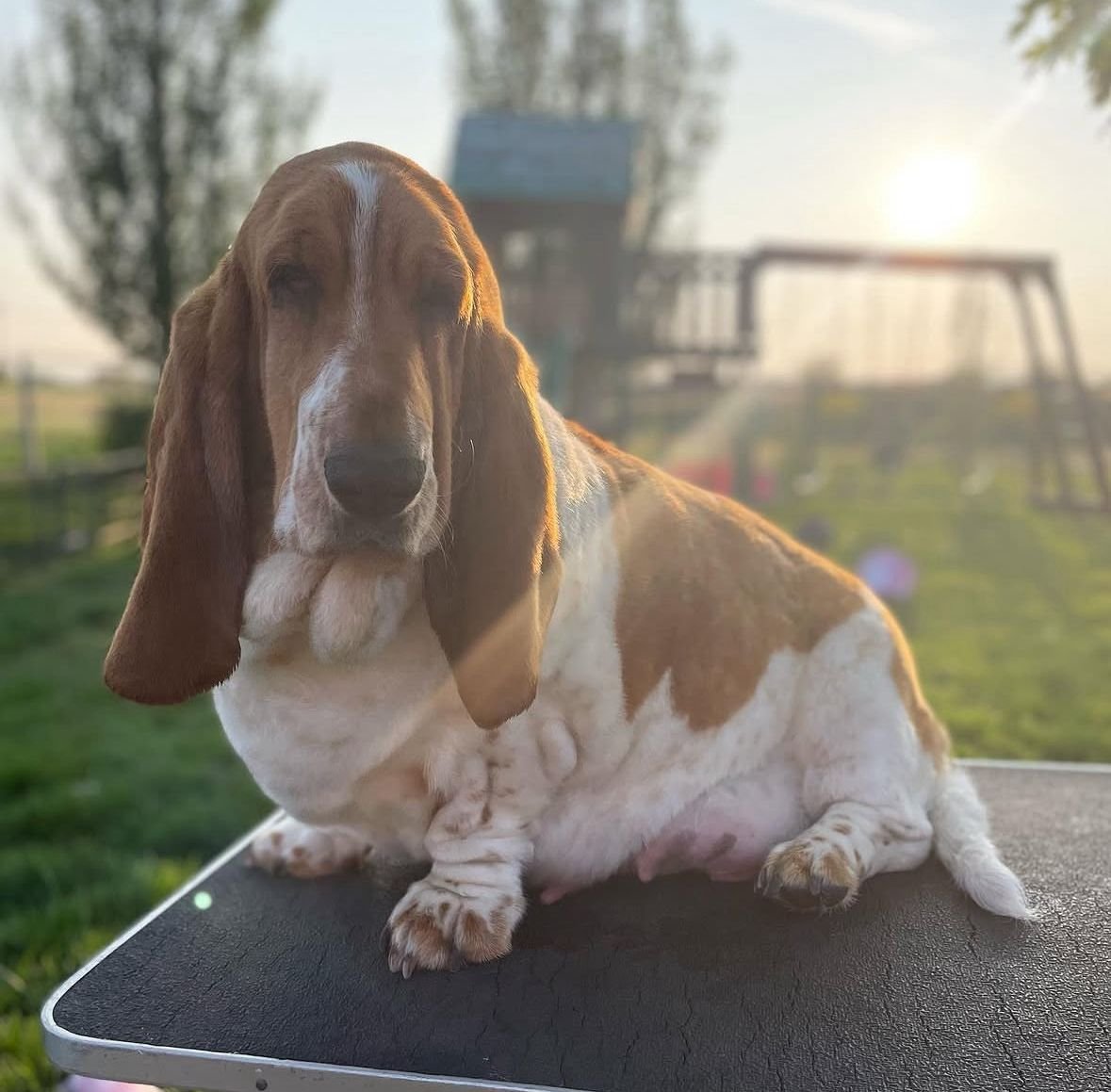

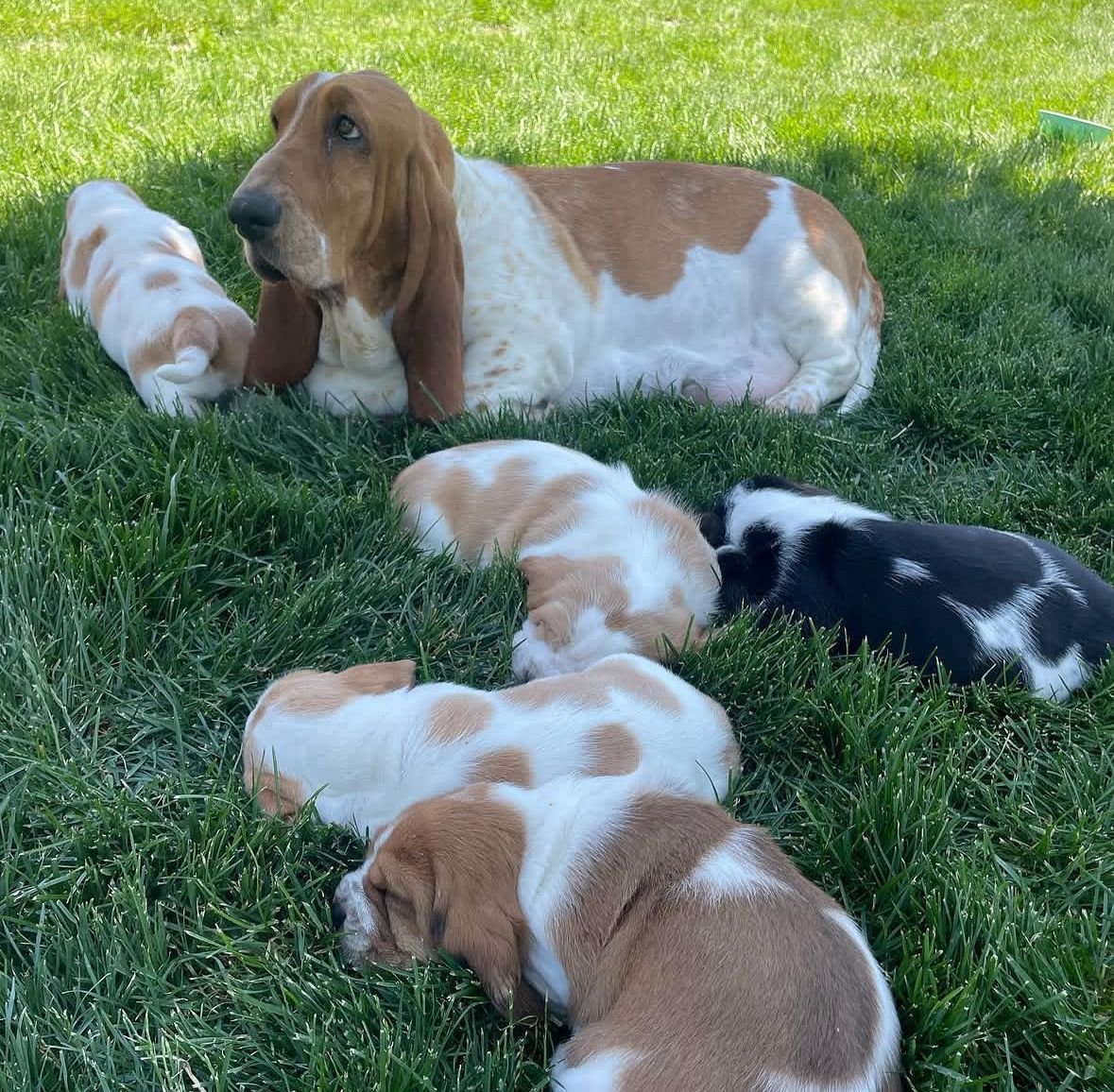
Dolly relaxing on the grass with her Basset Hound puppies
Breed guide & FAQ

The European Basset, explained.

Everything you’ll want to know about the European Basset Hound: where it comes from, what makes it special, how to care for one, and the questions families ask us most.

10 topics · 27 answersFrom breeders who live it
OriginFranceOld-world scent hound
Lifespan10–12 yearsWith good care
Height13–15 inAt the shoulder (FCI)
SuperpowerThat noseSecond only to the Bloodhound
At a glance

Basset personality in paws.

5 paws = very high · 1 paw = very low

Affection with family
Good with children
Good with other dogs
Energy level
Shedding
Grooming needs
Ease of training
Baying / barking
Apartment friendly
Complete breed guide

Everything about your future Basset.

From old-world origins to daily care, here’s what we’ve learned from years of raising European Basset Hounds in our own home.

01

European vs American Basset Hound

Both types come from the same ancient French hounds, but generations of breeding on different continents have shaped two clearly different looks. The European Basset is bred to the FCI (Fédération Cynologique Internationale) standard. The American show type follows the AKC standard and was shaped mainly for the show ring.

EUEuropeanUSAmerican
Breed standardFCI (Europe)AKC (United States)
BoneHeavier and more substantialLighter and more refined
ChestBroad and deepNarrower
Height on legLower, close to the groundHigher on leg
HeadLarger, with a fuller dewlapFiner and more refined
EarsLonger and set lowerLong, set a little higher
ExpressionSoulful, dignified, old-worldSweet, slightly lighter look
MovementCalm and deliberateA little freer and more active
TemperamentGentle, loving, easygoingGentle, loving, easygoing

European Bassets are often described as having a more “serious”, old-world hunting character alongside their gentle family nature. They tend to be a touch calmer and move in a slower, more deliberate way, with that powerful, ground-hugging outline the breed is loved for.

Our view

Neither type is “better” — they’re two takes on one wonderful breed. Our program is dedicated to the authentic European type, with bloodlines from respected kennels in France, Belgium and the United Kingdom.
02

Breed History

The Basset Hound is one of the oldest scent-hound types in the world. Its story runs from French monasteries to royal dog shows and, finally, to family sofas around the globe.

  1. Middle Ages

    Monks at the Abbey of Saint-Hubert in the Belgian Ardennes breed scent hounds famous for their noses. These hounds are the ancestors of both the Bloodhound and the Basset.

  2. Late 1500s

    Short-legged hounds are described in French hunting books. Bas means “low” in French, so a basset is literally a “low one”, bred so hunters on foot could keep up.

  3. After 1789

    After the French Revolution, hunting on foot becomes popular with ordinary people, and the slow, steady, sure-nosed basset is the perfect partner.

  4. 1863

    Bassets are shown at the first Paris dog show and win admirers far beyond France.

  5. 1866 onwards

    The first Bassets arrive in England, and breeders there start their own programs.

  6. 1885

    The American Kennel Club recognises the Basset Hound. Over time, the American show type develops a lighter, higher-on-leg style.

  7. Today

    European breeders keep the heavier, old-world type alive under the FCI standard. That’s the type we raise in our home.

Did you know?

The Basset’s nose is second only to the Bloodhound’s. Those long ears and the loose skin under the chin even help sweep scent up towards the nose — so when your Basset stops to sniff, they’re doing exactly what they were bred for.

03

Temperament

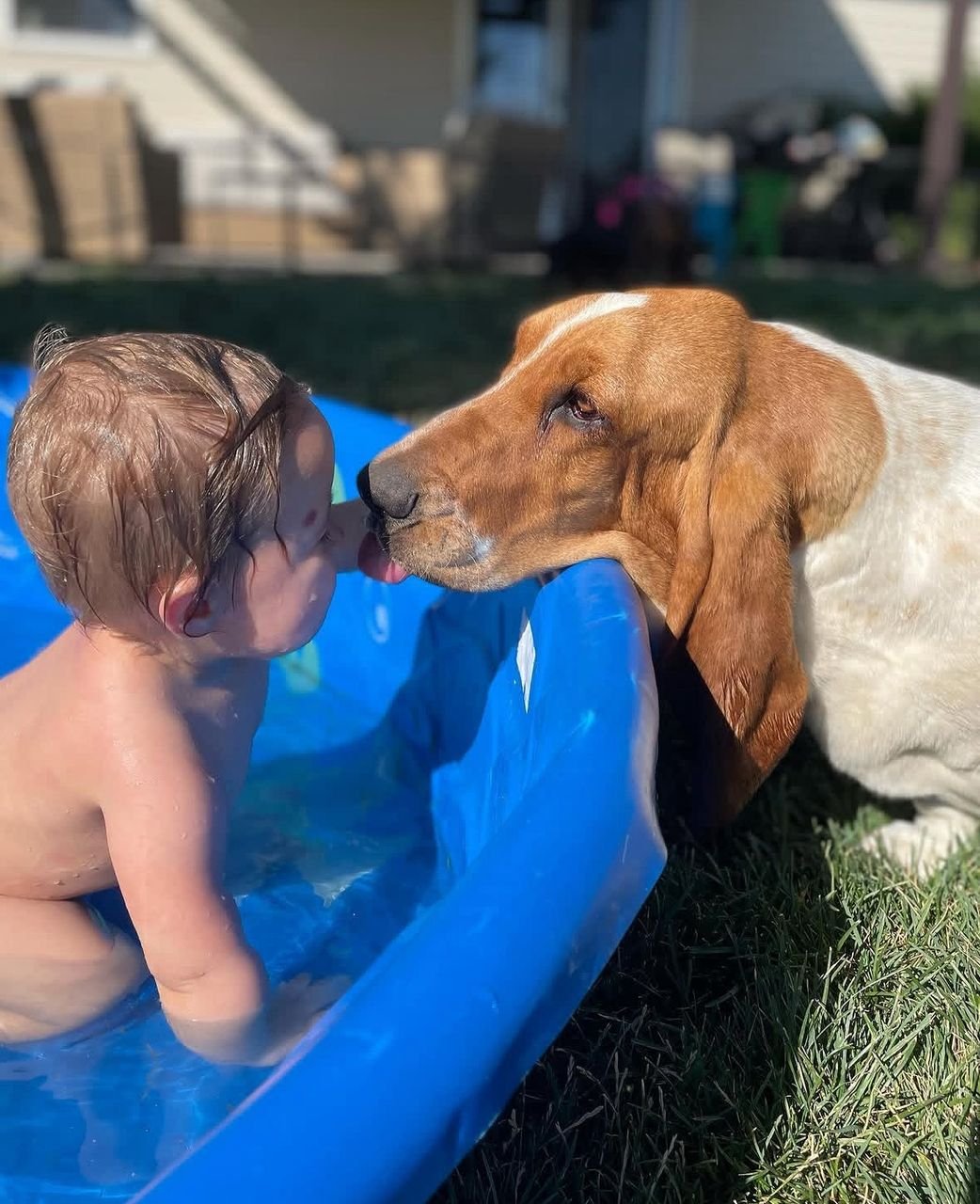
A baby getting a kiss from one of our Basset Hounds

Gentle, loyal and famously easygoing, the Basset is a true companion breed. Calm indoors, friendly with almost everyone and rarely aggressive, they fit beautifully into family life.

  • Affectionate and loyal — happiest when they’re close to their people
  • Patient and even-tempered — not easily rattled by noise or busy homes
  • Sociable — bred to work in packs, they usually love people and other dogs
  • Independent thinker — a scent hound’s nose sometimes outranks your voice
  • Doesn’t love being alone — long stretches by themselves can lead to baying or boredom
Our tip

Temperament is strongly inherited. Calm, loving parents tend to produce calm, loving puppies — that’s why temperament is one of the main things we breed for.

04

Exercise Requirements

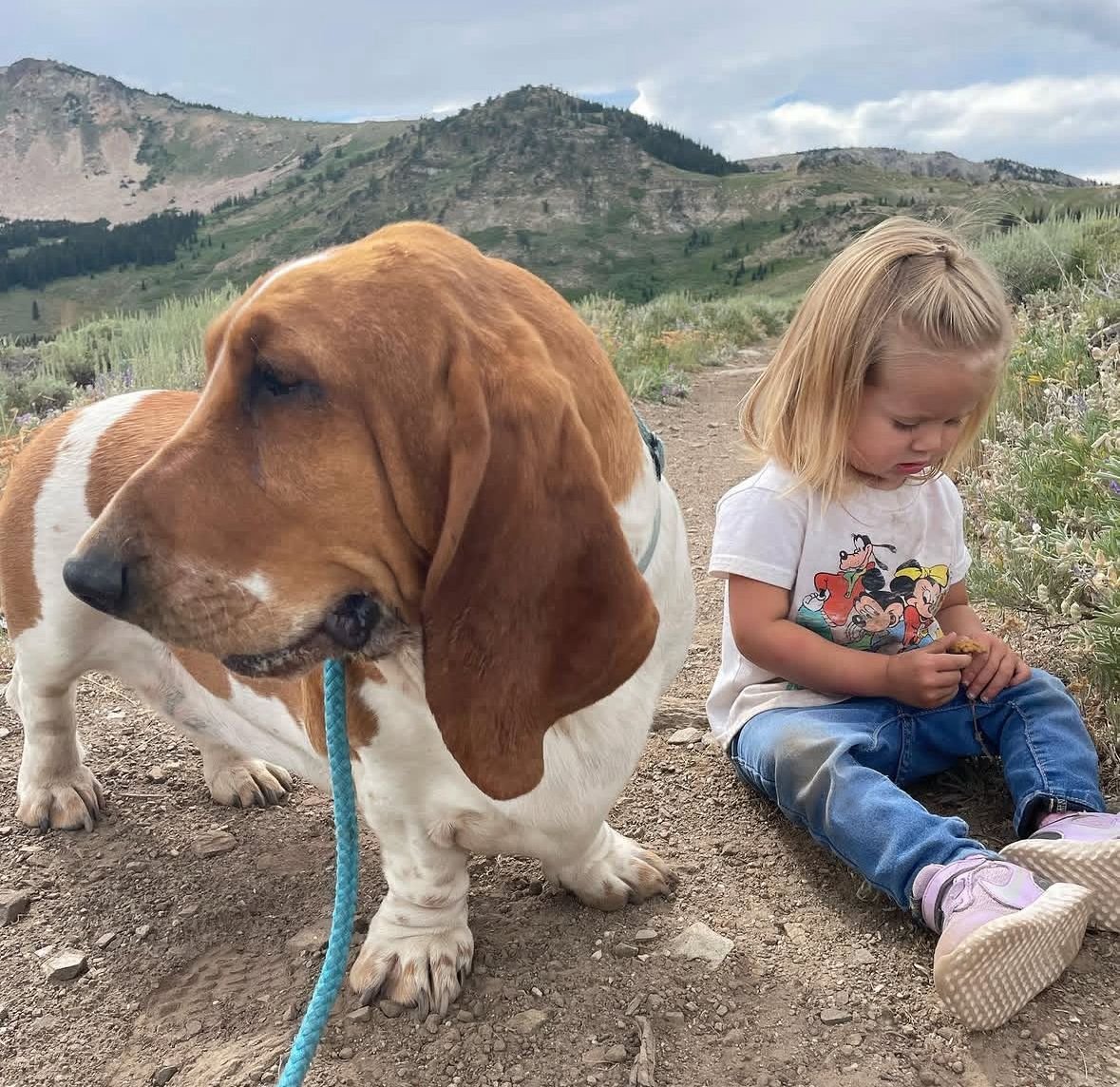
One of our Basset Hounds on a mountain trail

Bassets aren’t marathon runners, but they do need daily activity to stay fit, lean and happy. Think steady walks with plenty of sniffing rather than fast runs.

  • Always walk on a lead or in a securely fenced area — once a scent takes over, recall goes out the window
  • Walk in the cooler parts of the day in summer; heavy, low dogs feel the heat
  • Skip hard exercise for about an hour before and after meals to lower the risk of bloat
Puppies (up to ~18 months)

Short play sessions and brief walks on soft ground. Avoid stairs, jumping on or off furniture and long or high-impact exercise until the growth plates close at around 18 months. Over-exercising a young Basset can cause lasting joint damage.

Adults

Around 30–60 minutes a day, ideally split into two walks at a relaxed, sniff-friendly pace. Add scent games, snuffle mats or hidden-treat searches to tire out that clever nose.

05

Grooming Needs

The short, dense coat is easy to look after, but those ears, folds and nails need regular attention. A simple routine keeps your Basset clean, comfortable and healthy.

Daily

Quick check of eyes and face folds; wipe away any discharge or food.

Weekly

Brush with a rubber grooming mitt, check and clean ears, wipe the dewlap and skin folds.

Every 2–3 weeks

Trim nails — heavy dogs need short nails to keep their feet healthy.

Every 4–8 weeks

Bath with a gentle dog shampoo, then dry ears and folds thoroughly.

  • Bassets shed moderately all year, with heavier shedding in spring and autumn — weekly brushing makes a big difference
  • Keep ear tips out of the food and water bowl (a snood or narrow, deep bowl helps)
  • Dry ears and skin folds well after baths, swims and rainy walks
  • Brush teeth a few times a week to protect long-term health
06

Training Tips

Bassets are bright, but they think for themselves. They learn best with patience, consistency and something tasty on offer. If you want a dog that obeys instantly, this isn’t the breed — but if you enjoy a dog with personality, training a Basset is a joy.

1Keep it short and fun. Two or three 5–10 minute sessions a day work far better than one long one.
2Reward, don’t punish. Positive reinforcement with high-value treats wins every time. Just count those treats in the daily food allowance.
3Start house training on day one. Take your puppy out after meals, naps and play, use the same spot, and praise every success. A crate makes it much easier.
4Socialise early. The first 16 weeks are a key window. Gently introduce new people, sounds, surfaces and friendly dogs.
5Practise recall safely. Use a long line or fenced area, and never rely on recall in open spaces.
Our tip

Baying is usually boredom or excitement. Reward quiet moments and give plenty of nose work — a tired nose means a quiet hound.

07

Nutrition

Good food and a healthy weight are two of the biggest gifts you can give a Basset. Their heavy build and long back mean every extra pound counts.

Your puppy’s food

We raise our puppies on a premium large-breed puppy kibble and send a sample home with you. Stick with it for at least the first few weeks, and make any change gradually over 7–10 days to avoid tummy upsets.

How often to feed

Young puppies do best with 3–4 small meals a day, moving to 2 meals as they grow. Adults should still eat twice a day — never one large meal — to help reduce the risk of bloat.

  • You should be able to feel the ribs easily without pressing hard — if not, trim portions
  • Keep treats to about 10% of daily calories
  • A slow-feeder bowl helps gulpers eat more calmly
  • Fresh water should always be available
Never feed

Chocolate, grapes and raisins, onions and garlic, xylitol (found in some sugar-free foods) and cooked bones can all be dangerous for dogs.

08

Common Health Concerns

Bassets are generally sturdy dogs, and a well-bred, well-cared-for Basset usually lives 10–12 years. Knowing the breed’s common issues helps you catch problems early.

Ear infections

Long, heavy ears trap warmth and moisture. Check them weekly and clean them if they look waxy or smell.

Bloat (GDV)

Deep-chested breeds are at higher risk. Feed two or more smaller meals, use a slow feeder and keep things calm around mealtimes.

Back problems (IVDD)

A long back needs protecting. Keep your Basset lean, use ramps, avoid jumping off furniture and always lift with support under the chest and rear.

Hip & elbow dysplasia

Mostly inherited, which is why every one of our breeding dogs is OFA-screened before breeding.

Eye conditions

Bassets can be prone to glaucoma and eyelid problems such as entropion or ectropion. Redness, squinting or cloudiness needs a vet visit.

Weight gain

The most common, and most preventable, problem. Extra pounds strain the back and joints and shorten life expectancy.

Know the signs of bloat

A swollen, tight belly, retching without bringing anything up, drooling or restlessness can mean bloat. This is a life-threatening emergency — go to a vet straight away.

This guide is for general information and isn’t a replacement for advice from your own veterinarian.

09

Living with Children

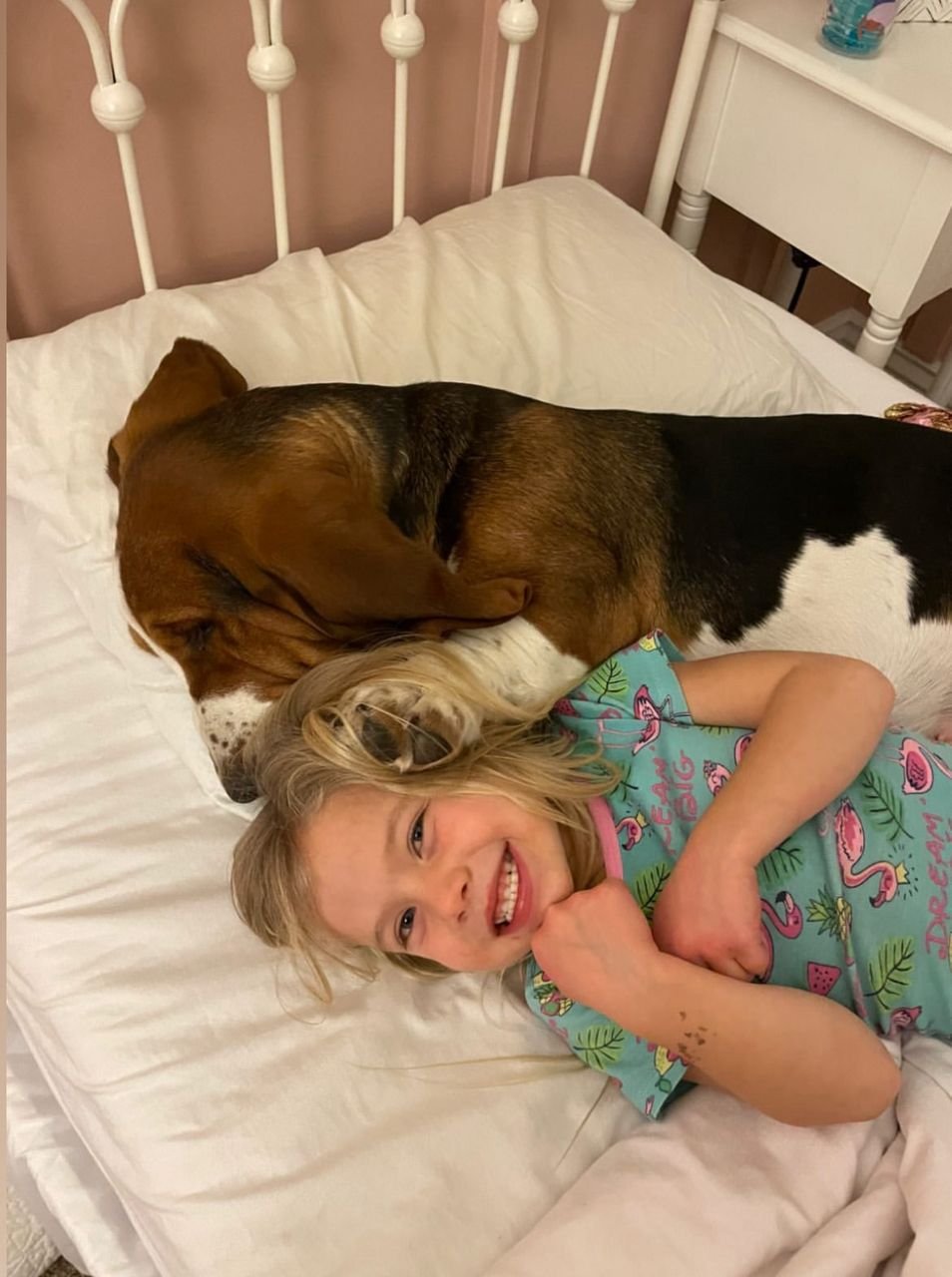
One of our daughters snuggled up with a Basset Hound

Patient, gentle and sturdy, Bassets are among the best family dogs you’ll find. Our own puppies grow up alongside our children, so they’re used to little voices and busy days from the start.

  • Teach the right lift: one arm under the chest, one under the rear — never by the front legs
  • No riding, tugging ears or climbing on the dog’s back
  • Always supervise toddlers and young children with any dog
  • Give your Basset a quiet bed or crate where they can rest undisturbed
  • Older children can help with feeding, brushing and simple training — a lovely way to bond
Our tip

Kids and Bassets have a lot in common: both love snacks, naps and lots of attention. Set a few simple house rules early and they’ll be best friends for life.

10

Living with Other Pets

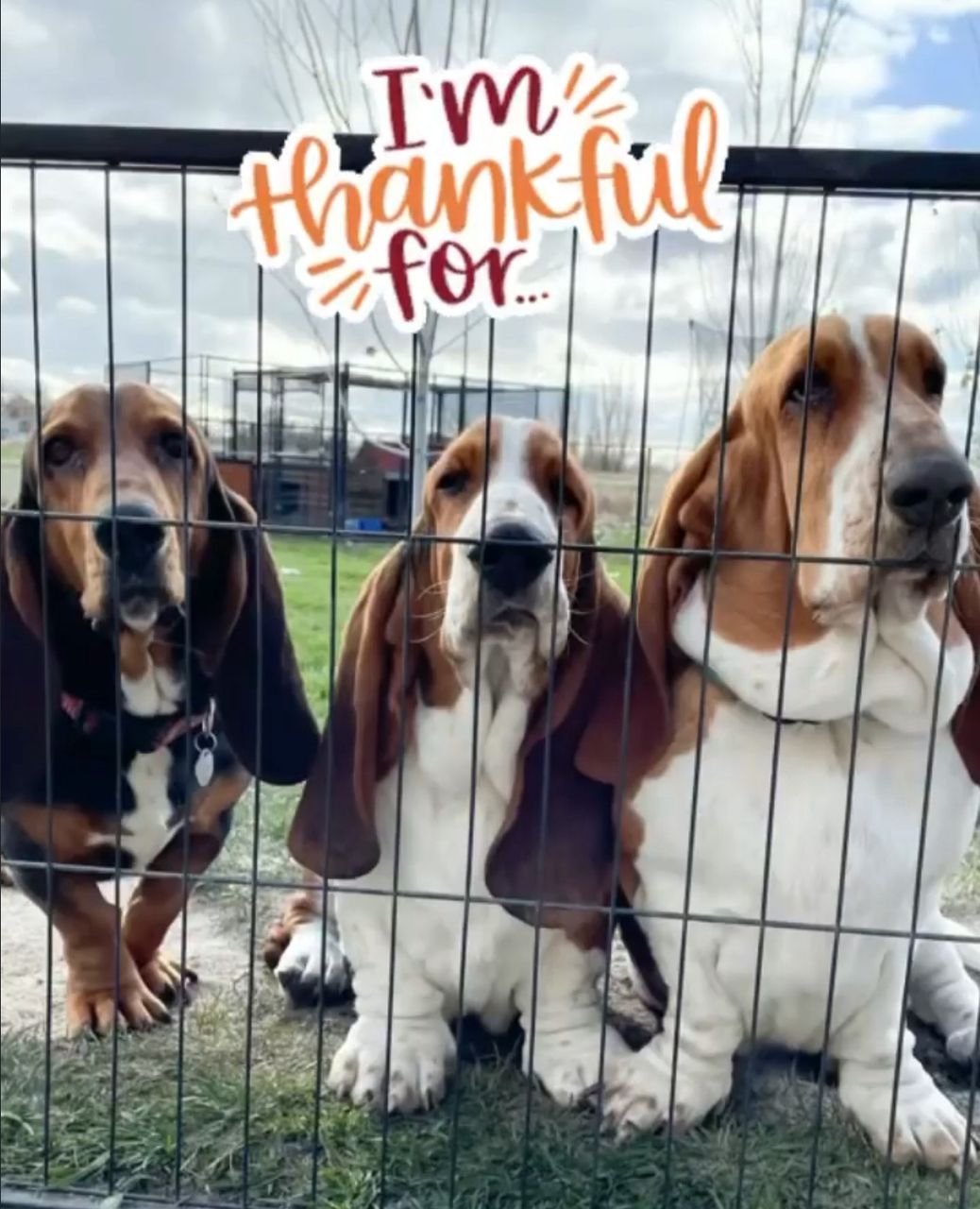
Three of our Basset Hounds together at the fence

Bred to hunt in packs, Bassets are naturally sociable and usually get on wonderfully with other dogs. Many are happiest with a canine companion at home.

Other dogs

Usually excellent. Introduce on neutral ground, on lead, with short, positive meetings.

Cats

Often fine, especially when raised together. Go slowly and give the cat high escape routes.

Small pets

Rabbits, guinea pigs and birds can trigger the hunting instinct. Always supervise and keep them safely apart.

Getting ready

Your puppy homecoming checklist.

A few simple things make the first weeks easier for you and your new Basset, and protect that long back and those big ears from day one.

Crate & soft bedding

A cosy den speeds up house training and gives your puppy a safe spot.

Slow-feeder bowl

Encourages calmer eating — helpful for a deep-chested breed.

Well-fitted harness

Spreads pressure across the chest rather than the neck and back.

Ear cleaner & cotton pads

For the weekly ear check that keeps infections away.

Rubber grooming mitt

Lifts loose hair and gives a lovely massage at the same time.

Ramp or pet steps

Protects that long back on the sofa, bed and car.

Baby gates

Keeps little legs off the stairs while they’re growing.

Chews & a snuffle mat

Healthy outlets for teething and that busy nose.

Vet visit within 72 hours

Required to keep your health guarantee active.

Common questions

Frequently asked questions.

Straight answers to the questions we hear most from families thinking about a puppy.

Breed basics

What is a European Basset Hound?

It’s a Basset Hound bred to the FCI (Fédération Cynologique Internationale) standard rather than the AKC standard used in the United States. European Bassets are usually heavier in bone, broader in chest, lower to the ground and more substantial overall, with a larger head, a fuller dewlap, longer low-set ears and a soulful, dignified expression. Our dogs come from respected kennels in France, Belgium and the United Kingdom.
How is a European Basset different from an American Basset?

The difference is mainly structure and type. European Bassets are heavier-boned, lower to the ground, broader in chest and more substantial, with a bigger, more expressive head and fuller dewlap. American show-type Bassets are usually lighter in bone, higher on leg and more refined. Both share the same gentle, loving temperament. We breed only to the authentic European standard.

How long do Basset Hounds live?

A well-bred, well-cared-for Basset usually lives 10–12 years. Keeping a healthy weight, regular vet care and the right amount of exercise make the biggest difference to a long life.

Do Basset Hounds shed?

Yes — they shed moderately all year, with heavier shedding in spring and autumn. A weekly brush keeps most of that hair off your floors and furniture.

Do Basset Hounds bark a lot?

They aren’t constant barkers, but they do have a deep, musical bay they use when excited, bored or on an interesting scent. Training, company and plenty of nose work keep it in check.

Are Basset Hounds easy to train?

They’re intelligent but independent. They respond best to positive reinforcement with high-value food rewards, plus lots of patience and consistency. They’re not the right fit for someone who wants a highly obedient, instantly responsive dog.

Are Basset Hounds good apartment dogs?

They can adapt well to apartment life as long as they get daily walks. Their moderate energy and generally quiet nature (apart from the odd bay) make them more apartment-friendly than many hound breeds.

Are Basset Hounds good with other dogs?

Usually, yes. They were bred to work in packs and are naturally sociable. We still recommend careful introductions and supervision for the first few meetings.

Buying & reserving

How much do your puppies cost?

Our puppies are $1,800–$2,000, depending on gender, colour and show potential. The price reflects our investment in health testing, quality nutrition, veterinary care and the time we spend socialising every puppy.

What do I need to reserve a puppy?

A $500 reservation deposit, which is fully refundable. It goes in full towards your puppy’s price — it’s not an extra fee. Once your application is approved and your deposit is received, your puppy is officially held for you and we won’t show or offer them to anyone else. We only accept deposits from approved applicants, and we review every application personally to make sure each puppy and family are a good match.

Why do you ask for a deposit?

We raise a small number of puppies each year inside our home, not in a kennel, and each one gets individual care from birth. The deposit lets us plan responsibly, give your family our time and turn other enquiries away in good faith. And it’s 100% refundable: if you change your mind for any reason before your puppy comes home, we return the full amount — no questions asked, no hard feelings. Trust goes both ways, and we’d never hold your money if the timing isn’t right.

How do I apply for a puppy?

Just text us from any puppy page or from our Contact page. We reply personally, answer your questions and explain the refundable $500 deposit before you decide whether to go ahead.

How do I join the waiting list?

Send us a text from the Upcoming Litters page to start the conversation. A refundable $500 deposit secures your place, and approved families are contacted in deposit order when a litter arrives. You can get your deposit back at any time, no questions asked.

How long is the waiting list?

It depends on litter timing. We usually have two to three litters a year, and most families currently wait about 3–6 months.

Can I choose my puppy’s gender and colour?

Yes, you can share your preferences on your application. We can’t guarantee a specific combination, but we do our best to match preferences in order of deposit date.

Do you provide a purchase agreement?

Yes. Every puppy comes with a written Puppy Purchase Agreement covering the health guarantee, spay/neuter requirements for pet-quality puppies and the responsibilities of both sides.

Health & papers

Are your puppies AKC registered?

Yes. Every puppy is registered with the American Kennel Club, and you’ll receive full AKC registration papers.

What health testing do your breeding dogs have?

All of our breeding dogs are OFA-certified for hips and elbows, CERF eye-certified every year, cleared by a board-certified cardiologist and tested for Brucella canis before every breeding. We also run thyroid panels.

What does your health guarantee cover?

Our two-year genetic health guarantee covers life-altering hereditary or congenital defects diagnosed by a licensed veterinarian. If a covered condition is diagnosed during that time, we’ll provide a replacement puppy from our next available litter.

Which vaccinations will my puppy have?

Your puppy will have had their first DHPP vaccine (distemper, hepatitis, parvovirus and parainfluenza) at 7–8 weeks, plus a full deworming program. Your own vet will give the boosters at 12 and 16 weeks.

Will my puppy be microchipped?

Yes. Every puppy gets an ISO-standard microchip before going home, registered in your name.

Going home

Can I visit the puppies before buying?

Yes — approved applicants are welcome to visit by appointment. To protect the puppies’ health, we ask that visitors haven’t recently been around other dogs or kennels.

Do you offer delivery?

We prefer families to collect in person from our home. If you can’t travel, we can arrange ground transport with a professional pet transport service for an extra fee. We never ship puppies as cargo.

How old are puppies when they go home?

Eight weeks old — the best age for bonding and settling in. We never let puppies go before 8 weeks.

What comes with my puppy?

AKC registration papers, a veterinary health certificate, vaccination and deworming records, microchip registration, our 2-year health guarantee, a puppy starter kit with food samples, a care guide and lifetime support from us.

What should my puppy eat?

We feed a premium large-breed puppy kibble and send a sample home with you. Keep to the same food for at least the first few weeks, and if you switch, do it gradually over 7–10 days.

How much exercise does a puppy need?

Keep it gentle: short play sessions and brief walks on soft ground. Avoid stairs, jumping and high-impact activity until the growth plates close at about 18 months, because over-exercising can cause lasting joint damage.

No questions match that search — try another word, or text us and we’ll answer personally.
Still curious?

Have a question we didn’t cover?

Text us any time. You’ll always hear back from us personally, and there’s never any pressure, just honest answers about life with a European Basset.